
Surgical Speciality
Endoscopic Ear Surgery
A minimally invasive approach that uses a high-definition endoscope through the natural ear canal to treat selected middle ear and eardrum conditions.
Overview
What endoscopic ear surgery involves
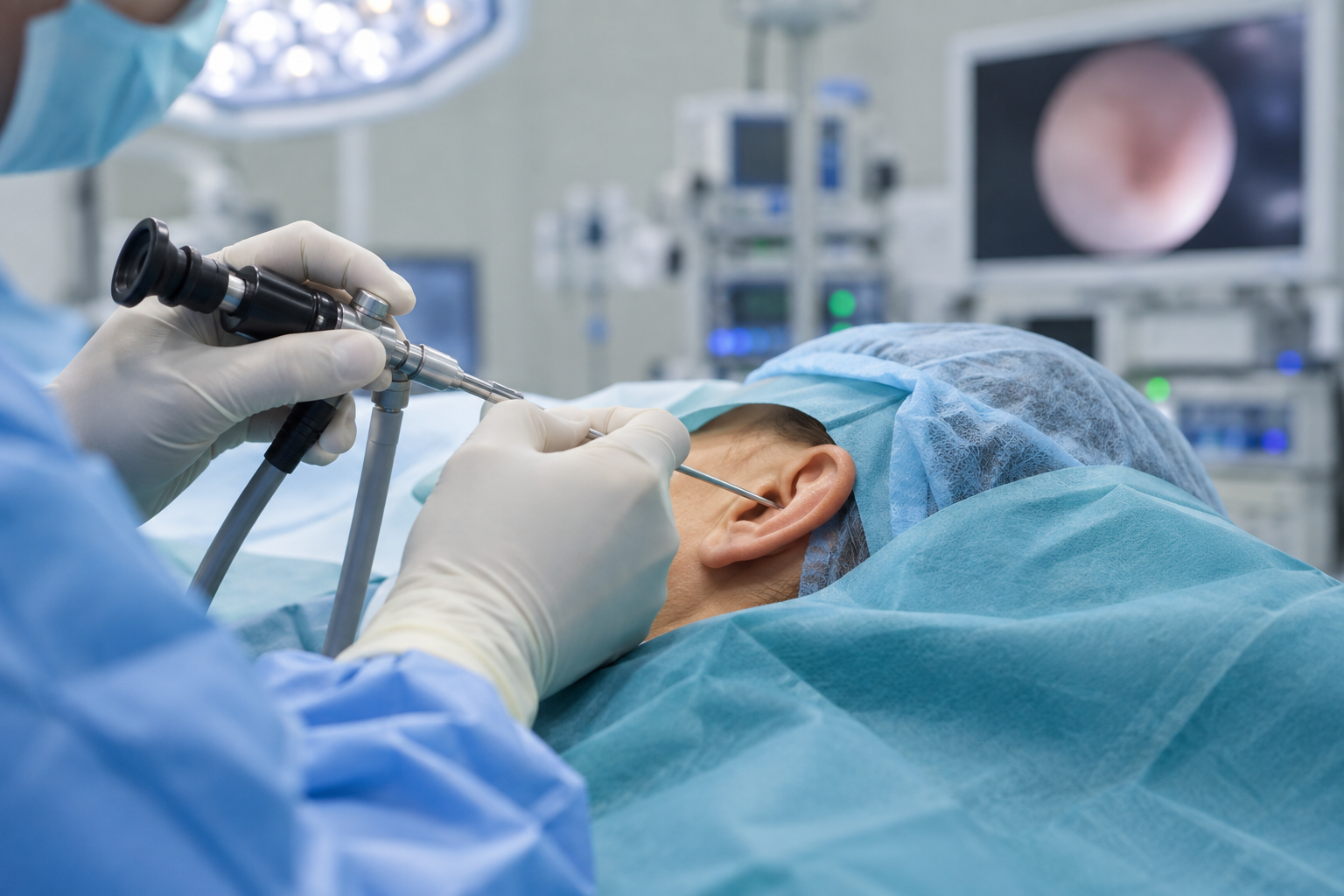
Traditional ear surgery is often performed under a microscope, sometimes through a cut behind the ear. Endoscopic ear surgery instead uses a slim endoscope inserted through the ear canal, projecting a magnified, wide-angle image of the middle ear onto a screen.
For suitable conditions this can mean working directly through the natural opening of the ear, with no external incision. The technique is not appropriate for every ear problem — whether it can be used in your case is confirmed only after examination and investigations.
Conditions commonly assessed
- Perforated eardrum
- Chronic ear discharge
- Selected cholesteatoma cases
- Conductive hearing loss from middle ear disease
- Retracted eardrum
- Middle ear reconstruction in suitable patients
Why Endoscopic
Potential advantages in suitable cases
Wide-angle view
The endoscope reaches around corners of the middle ear that are hard to see with a microscope alone.
Often no external cut
Access through the ear canal avoids a behind-the-ear incision in suitable cases.
Tissue preservation
A targeted approach can reduce the amount of healthy bone and tissue that needs removing.
Clear counselling
You are told what the procedure can and cannot achieve before you decide.
Outcomes vary between individuals. Nothing on this page should be taken as a guarantee of a particular result.
Patient Journey
From first visit to follow-up
- 1
Consultation
History, ear examination and endoscopic assessment of the eardrum and canal.
- 2
Investigations
Hearing tests and, where needed, imaging to define the extent of disease.
- 3
Planning
Discussion of whether an endoscopic approach is suitable, along with alternatives.
- 4
Surgery
The procedure is performed with anaesthesia appropriate to the case.
- 5
Follow-up
Planned reviews to monitor healing and hearing outcomes.
FAQs
Common questions
What is endoscopic ear surgery?
It is ear surgery performed using a thin endoscope passed through the ear canal, which gives a wide, magnified view of the middle ear without an external cut behind the ear in suitable cases.
Is it really scarless?
Because the approach is through the natural ear canal, an external incision is often avoided. Whether this is possible depends on the individual condition and anatomy, and is confirmed after examination.
Am I a candidate for endoscopic ear surgery?
Suitability is decided after an examination, ear endoscopy, hearing tests and, in some cases, imaging. Not every ear condition can be treated endoscopically.
What does recovery usually involve?
Recovery varies with the procedure performed. You will be given specific instructions about keeping the ear dry, activity, medicines and follow-up before you go home.
Will my hearing improve?
The goal depends on the diagnosis — some procedures aim to control disease, others to improve hearing. Realistic expectations are discussed before surgery.
Discuss whether endoscopic ear surgery is right for you
Book a consultation with Dr. Aashima Chopra, or send a message on WhatsApp and the clinic will get back to you.